 English
 Deutsch
 Español
 Français
 Italiano
 中文 (中国)
 Русский
From annealing steel for forming through hardening for long-term wear, each heat treatment process plays a critical role in how a part performs.
Through hardening, increase part life and improve performance.
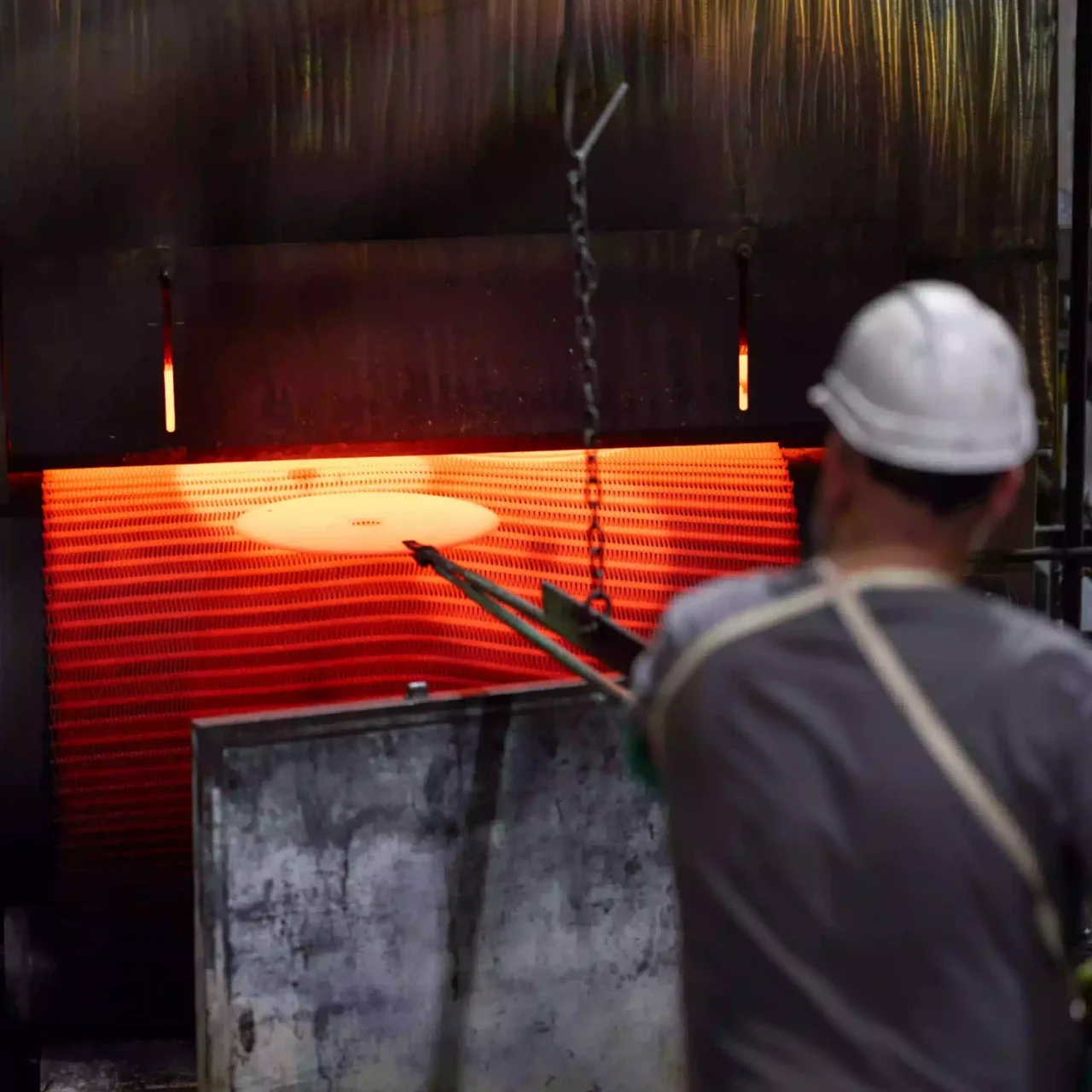
Hardening, also known as quench and temper, increases the strength and wear resistance of medium- to high-carbon steels. By heating the material to a controlled temperature and rapidly cooling it, we achieve a hardened microstructure suited for components exposed to abrasion and impact.
Tempering increases durability and reduces risk of cracking or failure.
Tempering follows the hardening process. Steel is reheated to a lower temperature and cooled slowly to reduce brittleness while maintaining strength. This step is essential for parts that must withstand repeated stress and impact.
Annealing makes for easier forming, machining and more consistent downstream manufacturing.
Annealing involves heating steel and allowing it to cool slowly, often at room temperature. This process softens the material, improves ductility, and enhances machinability and formability.
Normalizing improves consistency, stability and toughness across parts.
Normalizing uses a controlled cooling rate — faster than annealing, slower than quenching — to refine the steel’s microstructure. The result is a balanced material that offers improved strength over annealed steel without the brittleness of fully hardened steel.